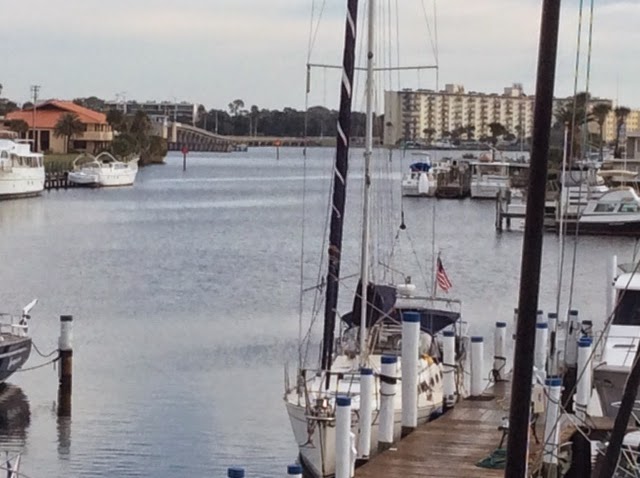
The previous header photo was of the reproduction Philadelphia tuckup, Marion Brewington, built by the Independence Seaport Museum. I lifted this photo from the Green Boats blog which unfortunately went dormant two years ago.
The Philadelphia hiker and tuckup were Americas first racing dinghies. Racing these catboats on the Delaware River was going full bore in the 1870s (which indicates that it was developing in the 1860s and maybe earlier) and continued to the early 1890s, when expanded commercialization of the Philadelphia waterfront shut down the tuckup yacht clubs and their boat houses. Following the lead of the sandbaggers, the unlimited hikers had ridiculous sail plans, carrying cat rigs up to 450 square feet. The Marion Brewington is a fourth class tuckup which had reduced the sail area to a more sensible 177 sq. feet (but still on the overpowering side in modern terms), set on a gaff rig on a hull of 15 feet in length. The fourth class tuckups were normally crewed by two. The two hull lines of tuckups that have made it to the present day, the Thomas Seeds and the Spider, are both fourth class tuckups
Ben Fuller put together a very interesting history of the hiker and tuckups in issue #148 of Woodenboat, pages 46 through 53. Well worth a read if you can get hold of a copy.
The famous and somewhat controversial American painter, Thomas Eakins, painted the hikers in his well known Sailboats Racing on the Delaware (1874).
I forgot something that happened in Beaufort, probably because Id rather not remember. While we were in the theater we heard a loud storm going on outside. Some water came into the boat through the mast boot but that was easily picked up. I learned to dispose of a used American flag with respect. We had retired one at the beginning of this cruise which had been torn to tatters by the wind. But the wind tore our newish flag -- and its flagpole -- off from the boat. I will figure out a more secure way of attaching the next one. Yes, I know I said we had decided to anchor in the Stono River, just short of Charleston, but our speed was so good today that we made the 3:30 opening of the Wappoo Creek Bridge and never had to deal with the fact that if you dont make the 4:00 opening, you have to wait until 6;30. It seems by dumb luck, we had favorable tide and the deep water of high tide most of the nine hours we were underway from 7 am to 4:00 pm. The favorable tide is proven by our average speed - 6.3 knots. I have thought of several additional reasons why it is impossible for that hypothetical Ph.D. to figure out a tide algorithm. It depends on where in the river you sail: in the center the tidal flow is different from nearer the sides. It varies during the six plus tide cycle, slow at the beginning and end and fast in the middle. At bends in the river, one side flows faster than the other. And when you add in motor-sailing, as we did all day today, your speed will depend on the wind direction and speed which vary from minute to minute, relative to the boats course which was a near continuous curve, and on the diligence and skill of the trimmer. Today the wind was generally from near our stern and the small jib self jibed many times, as it is designed to do. I hope to never mention that crazy hypothetical algorithm again. It was a cool but not cold day, warming up in the afternoon, with hazy sun poking amidst the light clouds. No rain. We had two small problems near the end. I bumped into the throttle lever while walking past the binnacle, decellerating our RPMs and bringing back the "alignment" problem that we hoped we had fixed. The rattle was back and big time. But coming to neutral and building up the RPMs slowly -- the rattle was gone again. Something is still wrong and needs to be fixed. Shortly after this I think I caught a crab pot float on our rudder. The wheel became very heavy to turn and our speed was considerably slowed. I think that a crab pot was the cause of the problem but we dont really know. I turned the boat several times and slowed her and if it was a crab pot float, it fell off. One of the crew at work, doing what he does second best (first is eating!)
Here is Charleston from our anchor on the Ashley River. On our two prior visits here we took a dock at an excellent marina on the Cooper River, on the north side of town, which was full tonight. But we had no plans for sight seeing this time and did not lower the dink.
We have also determined, subject to plans D, E and F, etc., tomorrows (and the next days) passage: to the Masonboro Inlet and the anchorage of Wrightsville Beach. At 6.5 knots this will take 24 hours, anchor to anchor. We plan to leave about 10 A.M., with favorable tide flushing us out. Decent wind from the west is predicted. We have also determined our planning deadline for arrival back in NYC -- June 7. Lenes niece, Barbi, and her son, Trevor who we hung with in Amsterdam last June, are visiting and will arrive on June 10. We would like to get home a few days earlier to get settled and unpacked, and those few days also serve a second purpose: as a buffer in case bad wind prevents the Atlantic overnight up the Jersey coast, as it did when I helped Jim bring his 26 foot "Aria" up in about 1996.
Aluminum Boat Building Is Alive And Well (in France)
Allures and Garcia Yachts http://www.garcia-yachting.com/ were well represented at this years Annapolis Sailboat Show. With the Allures 39.9 and the Garcia Exploration 45. In this review I will be discussing the Exploration 45 built by Garcia Yachts. Also known as Jimmy Cornells New Boat.
The Exploration 45 was designed with the input of veteran sailor, voyager, and cruiser Jimmy Cornell. The design comes from the board of Berret Racoupeau Yacht Design.
Even though this is a new design, and something I have not seen before, it does have something in common with other Garcias and the Allures Yachts a centerboard with twin rudders. This design makes for a very efficient sailing design because one rudder is alway vertical under sail. At slow motoring speeds having the twin rudders without the benefit of prop wash can make this type of design difficult to maneuver. The Expedition 45 solves this problem with the installation of a bow thruster. I was impressed with how well the boat maneuvered in the tight confines of the marina. With a draft of 3.44 with the board up and 9.14 board down shallow water cruising opens up a new world not usually visited by monohulls. With the board down windward performance is better than you would think of a centerboard yacht. As with all boats this design is a compromise of shallow draft and windward preference. It is a compromise I can live with! In our sail off of Annapolis, Maryland in 15-20 knots of wind we obtained speeds of 7-9 knots. The Exploration 45 handled well, which was to be expected of the design. In the afternoon the wind continued to increase and we decided to put a reef in the main. The process went with out a hitch. Over all, sailing this boat should be very easy for a couple.
One of the most impressive features of the Exploration 45 is the navigation station. The navigation station is located in the forward saloon. This allows great visibility out of the house windows. I was impressed in the fact I was able to see over the bow from this position. The interior was easy to navigate underway and comfortable. My only complaint is the limited access of the engine which is below the sole at the companion way which could make servicing the engine underway difficult. I found the filters and strainers were easy to access. The cockpit felt safe and comfortable. For the watch there is a safe place to sit behind the house with the chartplotter/radar within easy reach.
Down Below Underway
What about the construction? I took a very close look at the construction of this yacht. I am thankful that the Builder and Swiftsure yachts allowed me access to the bilge and systems areas of the boat.
I was very impressed with what I could see. The metal work stands out on Exploration 45. The hull is fair, the welds are well executed, and the hull to deck edge is beautifully done. The cabin top is made from fiberglass composite. The aluminum decks are covered with cork decking to give the appearance of a teak deck. The footing of this deck is very good and it feels good on the knees.
Hull Framing
I would very much enjoy finding myself hundreds of miles offshore, watching the miles tick by on an Exploration 45.
With Allures and Garcia Yachts being marketed in the USA by Swiftsure Yachts http://swiftsureyachts.com/garcia-exploration-45-2/
I hope to see more aluminum boats on the water here in the states. I look forward to when these yachts are on the used boat market and I find myself surveying one.
To view a video of the of the Exploration 45 underway go here: Exploration 45 from Swiftsure Yachts
The previous header photo was of the "Balmain Bug" a 1994 reproduction of the Aussie 6-Footer Historical Skiff Class. Aussie Ian Smith built her and she is shown on the dock sporting her light-air rig with a boom at least over 2 times the length of the boat and a bowsprit approximately 10 feet long (3.19 meter). Talk about being over-canvassed. The 6-footer class takes the cake for being the craziest of the crazies!
Quoting from the seminal book on the history of the Aussie skiffs, Bluewater Bushman by Bruce Stannard [1981];
"It is believed they were first built at Balmain in the 1890s and although they were first conceived as childrens boats, there is no doubt that they demanded the strength of three men who were courageous, good swimmers and had the strength and agility of circus acrobats...They carried a staggering 1000 square feet of sail including a main, jib, topsail, spinnaker, ringtail, and even a watersail. [Mike Scott, over in comments, defines watersail as..."hung below the main boom to catch that extra drop of wind.....almost drooping in the water....hence the name....!] With so much sail up and so little to support it, it is hardly surprising that the 6-footers spent a lot of time "in the gutter"....
The class peaked during the early 1900s, attracting numbers because it was the cheapest way to go racing. Here are some photos of the early 6-footers sailing around 100 years ago. [Found on the Net]
The original crews sailed the 6-footers upwind with the bowsprit plowing a furrow in the water; probably the only way they could balance the whole package upwind.
Now for photos of the modern 1994 Smith reproduction 6-footer. A picture of the "Bug" off-the-wind in a fresh breeze, shortly after being launched. Looks like the crew is trying to get to the back of the bus when reaching but, alas, there is no back of the bus.
After ten years out of the water, the "Bug" was relaunched in October for this years Balmain Regatta.
A quote from crew Campbell Reid:
"Even though she is based on a design close to a century old you can see how for their time these boats were pretty high tech...She will bury her bow in the blink of an eye but we were impressed at how seaworthy she was and were really happy that we could get upwind pretty well. In the six foot division of the historic skiff fleet at the regatta we think we are a serious threat.
The precarious crew position Campbell Reid finds himself on the foredeck/bow may be the most comfortable one in drifting conditions. [The next two photos pulled from the Balmain Sailing Club website.]
Stick two grown men into a 6-footer and the scale becomes obvious. A 6-footer becomes a true "micro" dinghy.
The obligatory GoPro video shoot from this years relaunch. The bowsprit is so long it gives a perspective of a much larger dinghy. The 6-footers, like her bigger historical cousins, sported canvas lee cloths in a vain attempt to keep the water on the outside
A more recent 2015 video of the Bug including flying a good size spinnaker without driving her under. (Came pretty darn close though!)
Click here for other posts on Australian Historical skiffs.
For a sketch on a possible rig if you wanted to make the 6-Footer a classic singlehander, click here.
It worked like clockwork. The alarm got us up at 6:30 and after coffee we were underway at 6:50 and Angelfish, which we feared, was easy; no soundings of less than 8.2 feet. We were through it by 7:50.
The tide flowed strongly against us in the Creek, with surface eddys swirling, as in the East River back home, and the wind in our faces, both of which slowed us down, which is good if you fear a grounding. So you can chalk us up in the group that holds that Angelfish is doable in a 5 8" draft hull. (High tide was at 8:10.)
Once out in Hawk Channel the depths were in the teens and we ran under Genoa alone at speeds of up to 7.5 knots with the wind a bit forward of the port beam. Yes, we actually got to sail!!! Yesterday and today we were greeted by dolphins again after a long absence from them in Dade County. Hawk Channel is wide and marked by buoys.
We were anchored behind Rodriguez Key by 11:30 am. The key is a big uninhabited, wooded oval l.8 miles long and 1/4 mile wide, which lays east to west. It is a nature preserve, girded by mangroves, with no apparent means to reach it by land, sea or air. On its north side, between it and Key Largo there is room for a hundred boats to anchor in 7 to 9 feet of water. We were the only boat here when we arrived, later joined by eight others. The winds were from the SE and hence the key provided little protection from them or the waves they kick up, but mild winds were predicted for the evening and night.
We were here so early that I wondered if one could tie up a dinghy on Key Largo (Spanish for Long Island?), a mile away. Yes, but only by the payment of $20! My curiosity to explore a bit of Key Largo was not that strong. We also thought to play with the SUP which has not been used since we rented it back in Miami Beach. But the day was not pleasant, cool, grey over head and showers predicted, so we did not do that either. And not many chores -- a low tie of the genoa to its roller furler was redone, as was the lower tie of Old Glory to her staff. The hose from the gas tank to the outboard now works again. I am so lazy these days. reading, writing and laying around. Is it possible that Im slowing down?
Time to say goodbye to the Harlems mascots -- though these birds can get nasty when not given what they want. They come every summer. The white ones are the parents, and the darker ones were born this year and are full size but not yet white. God willing, they will return to the Harlem in 2015 before we do.
During the period of this post I had only three sails totaling only eight hours and all in light to nonexistent winds. One of these was aboard ILENE, with Stu and Barbara. Stu is a Past Commodore and they recently sold their power boat so, being boatless, I was able to seduce them to sail with me. We went to the fuel dock in Port Washington to fuel up, round trip about six or eight miles, and it took us four hours of pleasant conversation, with a delicious lunch, except we motored half of the way.
I had planned to participate in the Harlems annual Take Veterans Sailing Day, and with Ilene away had slept aboard in anticipation of that event the next day. But the engine would not start, probably because I had burned up all of the four gallons of fuel in the starboard fill fuel tank in the process of removing the final water from that tank. Howard, in his mid eighties and very intelligent and spry, helped me "bleed" the air out of the system and change the Yanmar fuel filter, which had a bit of water in it and no fuel. Howard had spent a harrowing, storm tossed ill fated week aboard ILENE in the fall of 2010 during which major damage was done, which will be the subject of a post some day when I have no current news to report. Yet Howard was willing to sail with me again! We sailed his 28.5 foot Hunter, "Covered Call" for a few hours, and because both of us are veterans, we "sort of" fulfilled the mission of the day, though all of the American Legionnaires, our Clubs actual guests, had been taken out aboard other boats by then. The boat moved very well in light air and was a pleasure to sail. I was able to better attach the tack of her genoa and pull it closer to the furling foil to give that sail a better shape using bits of light line that Howard had aboard.
The third and final sail of this period was on "Jazzsail" with Lloyd and Rhoda. I had a good time working most of the time aboard whipping the ends of their lines.
As contrasted to the three brief sails and two days with overnight sleep aboards, there were six work days (totaling only 23.5 hours), including two with Ilene as helper. Her forte is organizing and things are now put away. Hopefully I will be able to find them! We loaded a lot of stuff aboard, cleaned inside and out, took her to the dock to fill water tanks, readjusted the davit bar, finally figured out a way to add air to the dink (using the old foot pump from the prior dink with the nozzle of the current dinks pump) and did miscellaneous bits of electrical, carpentry and marlinspike work including rigging a true preventer (of accidental gybes) system.
As of October 7, the last day of ILENEs "first season" of 2014, I have 66 "Work" days, and 27 "Other" days but only 50 "Sailing" days (on which I sailed and/or slept aboard). But during our second season, October 8 through December 31, God willing, we will add 85 more sailing days, bringing 2014s total sailing days to 135.
The storm surge having receded from the day before, we got underway at 6:30a.m. motoring the inside passage starting shortly after low tide. We held our breath a few times passing under 65 foot bridges as the tide rose during the day. There were about ten bridges in all but the low ones all opened on request, causing no delays. It began cold but clear and the winds were light. Bundled up, we were warm enough. The ICW here was mostly southerly and deep and wide enough to not be a cause of worry. With the winds mostly easterly, we were able to fly the small jib and later I was emboldened to fly the genoa, which gave us half a knot.
We arrived at the Halifax River Yacht Club at two. What a club it is. View with Lene from ILENE.
It is easily approached directly from the ICW through a straight, well- marked channel -- a 90 degree right turn west from the ICW just after passing a particular low bridge. You can see the day markers to the sides of ILENEs forestays and part of the bridge to the left.
The Club is a mile from the beach, using that bridge to cross the ICW. First built on this site in 1898, it was recently rebuilt. The dockmaster, Peter, formerly a teacher, after directing us to our dock and helping us with our lines and electric cord and brewing a pot of coffee for us, gave us a thorough tour of the place, of which he is justly proud. Im a big booster of the Harlem and could have done no better by the HYC than Peter did for the HRYC. He stubbornly refused our proffered tip. The tides are normally less than a foot here so the docks are fixed, not floating. HRYC has a large and elegant clubhouse and a large membership. Some of the boats here have been extensively done up in Christmas lights.
The restaurant had only its Tiki menu due to a membership meeting our night there so Peter pointed out several restaurants in easy walking distance, of which we chose McKs Irish Pub. He also pointed out the Clubs health club. He offered to take us to stores in his car and a free bag of ice cubes. The showers are clean and offer a copious flow of hot water. This club has many more members than it has room for boats in its marina. It has three hotel quality meeting rooms and had three outside organizations booked for meetings the day we were there. It has three full time office staff. It offers a free nights dockage for members of any other YC that is part of a council of 30 clubs in Florida. As members of the Harlem we paid only $1.25 per foot. It has an active ocean racing program and a youth program. The only drawback in my view is that in order to actually sail one has to go fourteen miles south in the narrow ICW and then through the somewhat tricky Ponce de Leon Inlet near New Smyrna to the sea with freedom to select the course you wish. Figuring at least five hours for going out and coming back in, this leaves few hours for a day of sailing. In the morning we declined the free coffee but Peter took me to the sea for a walk there and I walked back and then took Lene to the Supermarket, waited for her and brought her back. The beach is quite long and clean. Paddle boarders and surfers were out in wetsuits and the paddleboarders surfed the big waves. I noticed the communities of various species of sea birds standing on the beach, common gulls, those with long orange beaks, with the same beaks but black tipped and sandpipers, all in what appeared to be harmony. I talked with the fishermen on the pier built out into the sea. On my way back, taking the closest street paralleling the beach, I saw the usual suspects: tattoo parlors, salt water taffy, piercing shops, head shops, pizza parlors, fried fish joints surfing shops and those selling towels and tee shirts for women with sexually suggestive double entendres blazoned on the front. On my way back, from the low bridge next to the Club I shot a view to the north of two high bridges with a low one in between them, under which we had passed.
I chronicled the start of the Race To Alaska, R2AK, the 1207 km. (750 miles) slog from Port Townshend, Washington to Ketchikan, Alaska. The race is now finished with an attrition ratio of 25 DNFs vs. the 15 who were able to complete the course in the allotted one-month time-frame. Unusual for me, I monitored the tracker during the race, being particularly interested in how the large open dinghies (there were two of them, a Barefoot 5.8 built specifically for this race and a Mirror 16) would fare in this marathon. Not good as it would turn out. The Mirror 16 would drop out, and the Barefoot 5.8 would be the last to finish, 15th.
I cant resist a bit of Internet armchair race analysis here. (WARNING - this from a sailing dude, who likes to day race and sleep in a comfy bed, who last spent overnight on a sailboat decades ago and the closest Ive come to the Seattle/Vancouver Island cruising grounds is Portland, Oregon.)
With an inaugural race, over such an unusual course of such length, the initial possibilities of what constitutes a successful race program remain wide open. After the race, the picture is much clearer. Now with the results in, we can safely say; to win the R2AK with the current course, pick a very fast trimaran around the 8 - 9 meter (25 - 30-foot) range, and then crew it with three experienced offshore racers who know the drill, and can keep the accelerator down 24/7. That is what Team Elsie Piddock, in a F-25 carbon trimaran did, and they surprised themselves and everybody else by finishing in just over 5 days. Multihulls over 6 meters (20 feet) long took 5 of the first 6 positions.
What type of experience wins the R2AK? Team Elsie Piddock goes over their sailing resume before the race.
In the sailing monohulls, a disparate set of keelboats finished on top of that division. A Hobie 33 finished 3rd after holding 2nd for most of the race but lost out to a trimaran that made up about 160 km. or 100 miles in about a day and half of open water racing. A day racing keelboat, the Etchells 22, with a crew of three, finished tenth. It would be interesting to see how much the Etchells 22 sailed versus rowed as they seemed to spend much of their time making their way up to Alaska in the narrow cuts and not out in open water. The upwind ability of an Etchells 22 is extremely good but there are none, nada, creature comforts.
And in another demonstration of the turtle winning out over the hare (in this case the purpose built Barefoot 5.8), a pocket cruiser-keeler, the Montgomery 17 of Team Excellent Adventure finished 12th. When conditions were bad, they hunkered down, when they were good they kept going and when they had a chance to recharge, they took it (looks like they spent two days in Prince Rupert drying out, getting a shower, enjoying the restaurants.). All in all, a very creditable performance.
What happened to the team I was pulling for; the Tad Roberts design Barefoot 5.8? Two things:
Three crew on a 5.8 meter dinghy added too much weight in stores.
The lack of stability of an open dinghy meant they couldnt safely keep the pedal down 24/7 so they pulled up at night. This negated the third crew, who was added so they could keep racing at night.
If the R2AK as an event keeps going, and you want finish it in a monohull sailboat under 6 meters (20 feet) the best path seems to be a keel type pocket cruiser with a crew of two. Of course, the type of sailor who already owns a pocket cruiser isnt one to think a 1207 km. race in colder and colder water would be any fun at all.
A tip-of-the-hat to the design and sailing team of Team Barefoot Wooden Boats. They didnt finish where they thought they would, but they did finish. The Barefoot 5.8 was an innovative and bold design. It was wood and can be home-built. For shorter distance races this would be a very quick monohull.
Designer Tad Roberts kindly sent along some photos of the build of the Barefoot 5.8 and some early pre-race debugging..
The Tad Roberts Barefoot 5.8 sail plan, Set on a tall mast, the sail area was quite big for this size dinghy. The initial plan was to reef early and often but Im betting, if they had a choice, they would have changed to a shorter rig in the middle of this race. A very pretty sheer on this design.
The Barefoot 5.8 was built around the very substantial double-bottom grid. The sides would be added on later. Wood was 6mm. plywood.
Sides on. Deck on. You can see the kness that were used to support the top-side panels.
Open transom and double rudders ala the French offshore machines. The Barefoot 5.8 used hi-tech leeboards to keep the double bottom open for rowing and sleeping.
The Barefoot 5.8 looks to be a very potent Everglades Challenge design. In that race, open dinghies of this size (Im thinking of the Core Sound 17 and 20) can finish in just over two days. That seems about the right amount of time to drive an open dinghy 24/7 without completely boinking.
Here is a short video of Team Coastal Express in their Mirror 16. They slogged their way through the toughest parts, the Seymour Narrows and the Johnstone Straits, before deciding they couldnt afford the time to finish the race out. This video looks cold, very cold.
Mention must be made of the tenacity and persistence of the human-powered competitors that finished:
6th place - Team Soggy Beavers -Six paddlers in an OC-6 canoe (with ama)
11th place - Roger Mann - first solo competitor in a stock Hobie Adventure kayak/trimaran with Mirage Drive. Either you think this guy is Superman (he kept pushing 20 hours out of 24 for 13 days) or crazy-dumb (he almost lost his life twice, a pitchpole and another time he ended washed out but tethered to his kayak).
13th place - Team Boatyard Boys - two guys in a 17 foot Swampscott Dory, on which was added a small cuddy cabin. The original intention was to sail a fair bit but the windward performance was so bad they ended up rowing for most of the race
14th place - Mike Higgins in a 17 foot kayak. Yep, he paddled all the way.
Reader Mike Scott, who lives on the left coast, and was much closer to the action, added this comment which Ive dragged over to the main post.
"Ive been avidly following the race after being at the pre-race party, and getting up at 4am the next day to watch the start - which was set to the fanfare of the Russian National Anthem - quite bizarre, very stirring music, and typical Jake Beattie. I, too, loved the Barefoot Wooden Boat entry, and am hoping they might bring it up for the Wooden Boat Festival in September. Will be very interesting to see who and what enters next year - if it flies again. Much speculation on the perfect boat, but as all depends on available wind and this year certainly favoured the speedsters, with a knarly Northwesterly blowing for much of the race......."
My first sail out on Eastchester Bay this season was on Bennetts new boat. This means that the first 11 of sailing the calendar year were all on Bennetts two boats: The first eight of these in the BVIs on On Eagles Wings, plus the two days bringing his new Beneteau back from RI and finally, the eleventh, a day sail arising from a chance meeting with Bennett and his friend, Will, in the parking lot on a day when I had planned to work aboard. OK! I admit it. I confess! Yes, I am weak to the siren call of sailing, and strapping me to the mast would not help this weakness. We sailed for about three hours and then spent a few more on the mooring investigating two possibly related problems: a rasping knocking sound when the rudder passed 15 degrees to starboard and the auto pilot steering off course rather sharply to port when activated. I under stand that both problems have already been fixed.
Two nice social events in peoples homes as well: a party to honor the naming of YC friends Mark and Marcias new grandson and a birthday party to celebrate Bennetts birthday.
Then came two five hour days -- cleaning the boats interior, putting things away, putting things back together. It all payed off: my severest critic, Admiral Ilene, said the boat looked "clean" when we finally went sailing. Dont worry, I know where the remaining dirt is hidden and will get to it soon.
Our first sailof 2014 on ILENE was four hours with Dev and her boyfriend, Vin, who we were very pleased to meet.
An intelligent gentleman. It was his first sail and with the wind Gods not having provided enough, I had the pleasure of inviting them back for a day with more wind so he can enjoy the true thrill of sailing. So we did some motoring though we did get up to 4.8 knots Speed Over Ground for a while during one brief puff. We got into Little Neck Bay before turning back. Two things are not working yet: Speed through the water measures at zero due to the speedo wheel being clogged and the Genoa cannot unfurl though I do have the Allen headed set screw needed to fix that issue. This will take place next time I am aboard with another person to haul me to the top of the mast in a bosuns chair in light wind.
Sid and his wife, Jan, their daughter, Danielle, and Danielles friend, Kara, both age 13, and our nephew, Mendy joined us the next day for five hours, mooring to mooring. Sid was a colleague of mine and continues to work in the law; Jan is a recently retired teacher. They are also gourmet cooks but this time they brought delicious store bought Italian delicacies for lunch. More wind than the day before. Almost everyone took a turn helming so Auto got a day off. We passed east through Hart Island Sound, and then deeply into Manhassett Harbor before going near the Throggs Neck Bridge and then back to the mooring. On the way back we passed near a 2006 Saga 40 which I learned is kept at the nearby Morris Yacht Club. Perhaps we can get to know the owners better but we have been away a lot in the summers of late, so that may be difficult. We had the Clubs pretty good burgers (except they have not yet mastered the "rare" button) for dinner in an elegant friendly atmosphere at a bargain rate. Except for first timer Kara, they are winners of ILENEs "frequent sailor" awards, but that does not excuse my forgetting to shoot their photos; sorry.
Next a day of shopping for the boat: a punch to knock out a pin at the forward end of the boom that will no longer be needed; weather stripping to seal water out of the propane locker; the aforesaid Allen head set screw; the services of a lumberyard to cut a small piece of cherry veneer plywood I had into three smaller pieces to fix a hole in a corner of the aft port cabinet; cherry veneer to iron onto one of the edges of each such piece; a mast base block and a rope clutch (so that when installed, and the line snaked through the tunnel, I will be able to adjust the outhaul from the cockpit instead of having to go forward and put the boat into irons to tighten the main sails foot); and a shackle to hold up the starboard dinghy davit tackle to replace the one I lost. All this for only $200!
My third sail aboard ILENE was with club members Rhoda
and Lloyd
and their grand dog Rocky, a cute young well-behaved Westie.
About 4 hours to get to the Seacliff YC mooring field in Hempstead Bay and tack back. There was enough wind, over 20 knots at the end, that a first reef of the main would have been desirable. Lloyd, who had not yet an experienced ILENE rounding up due to being overpowered, has now learned how to deal with this, gaining confidence in the process. I love teaching, which readers of this blog probably characterize as my pedantry.
Fourth of July weekend had three boatloads of friends but the first of them got washed out by the weather. Rain dates are being sought. Stay tuned.
Yes, a long day -- underway at 6:15 and put anchor down at 3:45 -- 9.5 hours of motoring in the ICW. Today and yesterday we traveled on sections of the ICW that Ive never traversed before, having been outside at these latitudes on past trips. And I noticed how almost exclusively, and less so than in the spring of 2012, the ICW is in fact a one way street - southbound only - and seems devoid of commercial traffic. It is a road dedicated to snowbirds migrating south.
Our depth sounder is perhaps our most valuable piece of navigation equipment in the ditch and we watch it like hawks. When it starts to go from lets say 14 feet of water to 13.9. 13.8, etc, it means one of two things: either we have moved to a section of the ICW with shallower water, or we have started coming closer to one of the sides. We assume it is the later, try to guess which side we are too close to and go gently toward the other side, watching to see it the water deepens under us.
We noticed two potential mechanical problems that have to be thought through. One, the autopilot seems less responsive and more likely to roam a few degrees to either side instead of staying on the straight and narrow,Perhaps it is only a perceptual problem in that we notice the situation more when we are in a narrow path as compared to when there is nothing but horizon in front of us. Two, the voltage on the starting battery is getting low. Both batteries are charged together in the normal course of events, by the solar panel and by running the engine. The third method is by turning on the battery charger when we are attached to shore power. My current theory on this problem is that the battery charger is somehow decreasing rather than increasing the voltage of the starting battery. It seems to have done this last winter when I replaced the battery, and now again in Deatons, where again we had shore power. Yesterday I replaced the broken off lifting stem of the galley sink trap with a bolt and nut from ILENEs collection of them and cleaned out the filter leading to the fresh water pump, thereby restoring a healthy flow of hot and cold water.
Well today: The first thing occurred as we were getting underway in less than full light. About 30 small fishing boats, each with two warmly clad people were milling about. Lene had to pick our way through them while I secure the anchor.Then a siren sounded and they all took off at breakneck speed overtaking us on both sides, motors roaring and wakes a making.Wild! Some sort of race or fishing contest perhaps.
We saw dolphins again, the third day in a row; they seem to love to play in the inlets and finally Lene got a shot of one, albeit not the greatest.
Why did our passage take so much time? Blame part of it on the bridges. There were four low ones on todays route, for which one has to hurry to be there on time and then to wait with other boats for their appointed opening times. Waiting, keeping a boat stationary in close proximity to others, can be quite a challenging task if there is strong wind and or tidal current. But today there was no wind. Actually we did get a knot from the Genoa for about an hour but after that the wind Gods took a break. By dumb luck we made the first bridge on time. The second required us to push ILENEs Yanmar diesel harder than I have ever pushed her --3000 rpms. In addition, we made it because the kindly bridge tender asked the waiting motor boats whether they would mind a five minute delay in the opening so the three sailboats could catch up. They graciously agreed. But the third and fourth bridges could not be made by speeding up so we had to make the appointed times by slowing down.
Wrightsboro is a college town for nearby UNC Wilmington, which city is far by boat but near by car. The anchorage is easily reached by small boats who take a left turn almost immediately after passing under the last bridge. But this route is not recommended for boats with deeper drafts like ILENE. We had to continue down the ICW for another 1.5 miles, then take the left, leading to Masonboro Inlet with its protective seawalls extending arms out to sea (through which we plan to depart tomorrow for an overnight jaunt to Charleston SC),
and another left along the inside of the barrier island and another mile and a half
to the sheltered anchorage area.
We lowered (and later raised and secured) the dink for a ride in to town, checked out the beach
and brought a few groceries. It is not supposed to be as cold tonight, or tomorrow, as it was last night and today. No, it is not shorts and tee shirts weather yet. And have I mentioned how much I have enjoyed and depended on Lene; without her company and help this trip would be no fun and very difficult.
After anchoring we learned that our friends, Dean and Susan on "Autumn Borne" pulled in here after us, at the end of an ocean sail from Beaufort. They have been chasing us since they left Catskill New York, We had a headstart. But while we are going outside tomorrow for 162 miles, overnight to Charlestown SC, they are going inside and visiting friends for a few days. So for now, we are still just two boats whose wakes have crossed.
Ive covered the Three Bridges Race before on Earwigoagin, a 50 mile jaunt around winding narrow rivers, under low hanging bridges, in the English Norfolk Broads. Here is a drone video of this years event, no sound, just bucolic images of classic sailing classes starting the race under typical English summer weather, alternating glorious sun with grey belly cumulus. From the text blurb accompanying this video:
"The 55th Three Rivers Race was the first time aerial photography was allowed by organisers, Horning Sailing Club. Richard Kemp of Skyhover used an octocopter to photograph the start of the race . The three rivers from which the race gets its name are the three northern rivers of the Broads (Norfolk, UK), the Bure, Ant and Thurne. There are numerous Windmills and pumps such as the white Thurne Mill along the route.
At first the race sounds simple, an out and back course, in which you must round four marks and return to the start. It begins to sound trickier when you discover the course is in the order of fifty miles in length. It requires great planning and skill to navigate in unpredictable tides and variable winds. Many of the classes are for historic boats built in Norfolk and Suffolk for the difficult local conditions: such as the River Cruiser (first built 100 years ago) Yare & Bure One Design, Norfolk Punt. The greatest outsider challenge comes from the extremely fast Thames A Raters."
Navigators & General Three Rivers Race 2015 from Skyhover Aerial Video Norfolk on Vimeo.
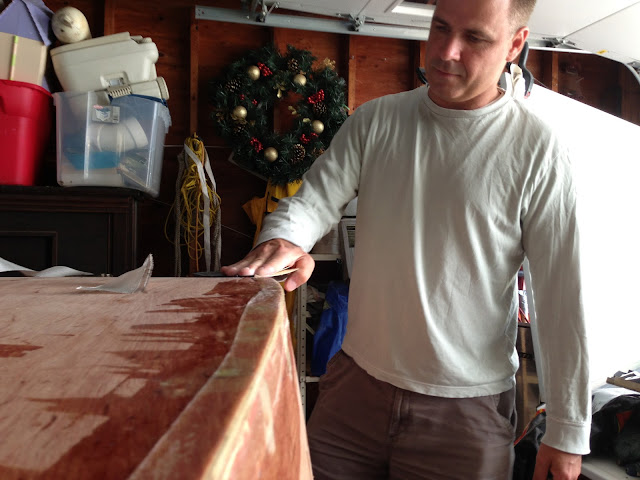
My brothers and I have slowed our building of the Optimist down to a crawl. However, my brother Darren has taken the lead and wants the first boat to launch on July 4th.
He has purchased sail, tiller and extension, blades (rudder, centerboard), gudgeons from APS - Annapolis Performance Sailing.
To protect the chine he has laid down a 2 inch strip of fiberglass cloth in simple-clear polyester resin. It should provide a bit of resistance to any "hard blows" on rocks that make up the shore of our part of Lake Ontario.
Polyester resin is quick to harden and very easy to sand. It costs about half the price of shipping epoxy to us. Its just a short drive to the auto parts to pick up a quart.